
Selecting the right yoga retreat requires careful research, particularly when travellers weigh location, program structure, and instructor credentials against personal goals. This article addresses the most common questions prospective guests raise before enrolling in a program with rishikesh yogis yogshala, providing the practical detail needed to plan a retreat with confidence.
Key Takeaways
A yoga retreat in Rishikesh combines structured asana practice, meditation, pranayama, and access to the Ganges riverfront and Himalayan foothills.
Retreat programs accommodate all experience levels, from first-time practitioners to advanced yogis.
Program duration ranges from short three-day sessions to month-long immersions, depending on individual objectives.
The optimal travel window falls between September and April, based on climate conditions.
Sattvic vegetarian meals form the dietary standard across nearly all retreat centers in the region.
Program costs vary according to accommodation category, duration, and included excursions or therapies.
A yoga retreat in Rishikesh places travelers at one of the recognised centres of yoga practice worldwide. Positioned along the Ganges River at the base of the Himalayas, Rishikesh has functioned for decades as a hub for ashrams, teacher training institutions, and meditation centres, drawing practitioners from across the globe. Enrolling in a retreat here introduces guests to a disciplined daily structure built around early morning practice, riverside reflection, and evening satsang sessions, supported by a community of individuals pursuing similar goals. Programs typically integrate physical postures with philosophical study, breathwork, and periods of quiet introspection, catering equally to short-term visitors seeking a reset and long-term participants pursuing deeper personal development. The town's unhurried pace supports this process, allowing visitors to step back from daily routines and re-establish a connection between physical practice and mental clarity.
Before committing to a specific program, prospective guests benefit from understanding the practical details involved — daily schedules, dietary arrangements, packing requirements, and program costs among them. The following section addresses these considerations directly, drawing on the questions raised most frequently by both new and returning guests. Travelers evaluating their options will find that Rishikesh Yogis Yogshala structures its programs around exactly these concerns, integrating daily practice, nutrition, accommodation, and cultural excursions into a single, well-organised itinerary.
Review the following questions to understand what a retreat involves before finalising a booking.

Frequently Asked Questions
What does a typical day involve on a yoga retreat in Rishikesh?
Most programs begin practice before sunrise, generally between 5:30 and 6:30 AM, starting with pranayama and meditation followed by an asana session. Breakfast follows around 8 AM, after which guests often attend a lecture on philosophy or anatomy. Afternoons remain largely unstructured, allowing time for rest, river walks, or local exploration, while a second asana session and an evening satsang or chanting session close the day. Most centres schedule lights-out between 9 and 10 PM to support the early wake-up requirement.
Is prior yoga experience required to participate?
No. Retreat programs are designed to accommodate complete beginners alongside experienced practitioners. Instructors adjust postures and provide modifications so that every participant practices at an appropriate level of difficulty. New practitioners maintain pace with the group through guided instruction, while advanced participants receive additional variations to deepen their practice.
What retreat duration suits a first-time participant?
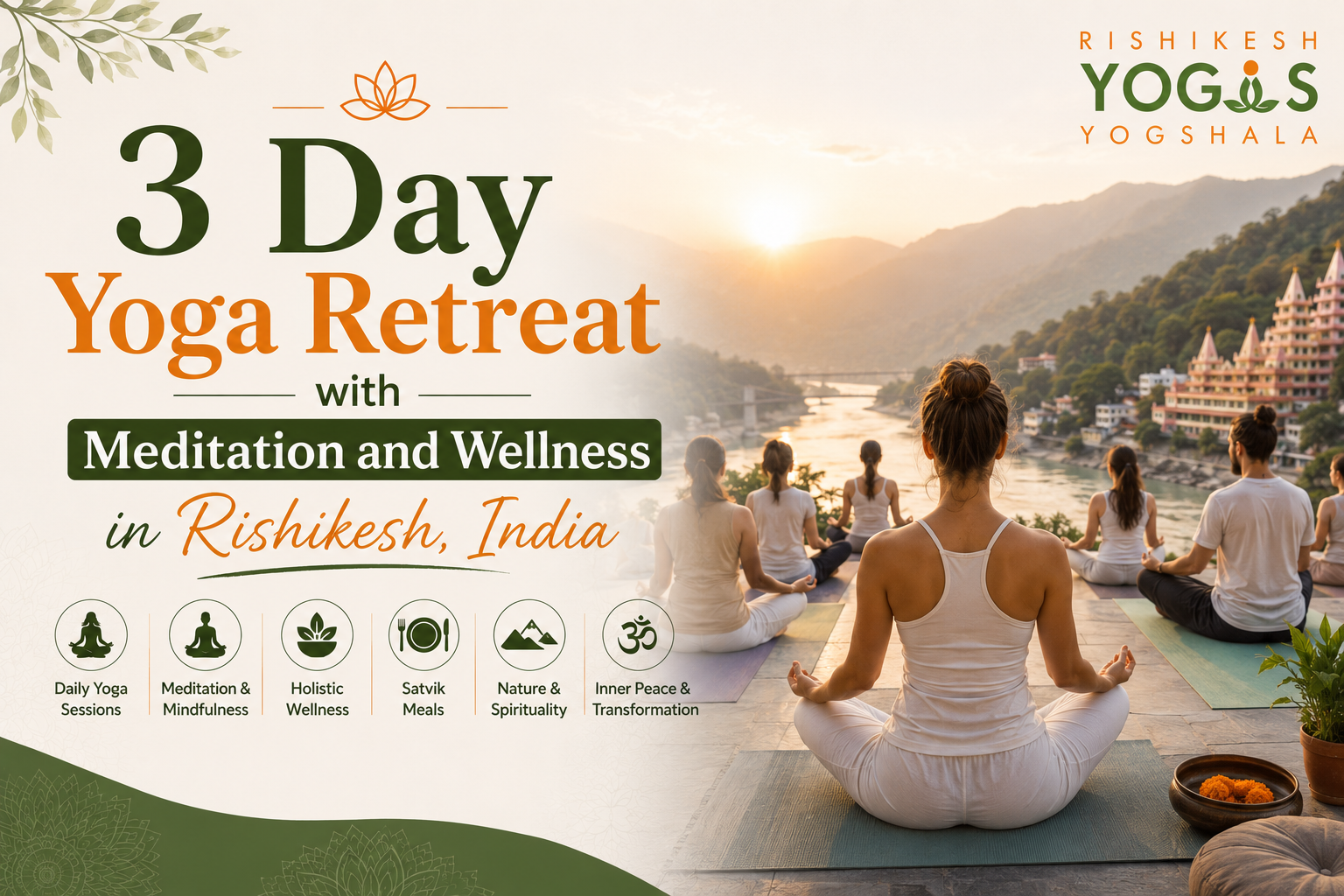
A one-week program generally suits first-time guests. This duration allows sufficient time for the body to adjust to the schedule, build strength and flexibility, and absorb the philosophical framework taught alongside physical practice. Shorter three-day programs suit travelers with limited availability who still wish to experience the format, while month-long immersions suit those pursuing significant personal transformation or considering enrollment in a teacher training course.
What items should travelers pack for a retreat in Rishikesh?
Travelers should pack lightweight, breathable clothing suitable for both practice and modest daily wear, given the conservative, spiritual character of the region. Additional essentials include a reusable water bottle, a light shawl for cooler evenings, comfortable footwear for local excursions, and personal toiletries, as some ashrams provide only basic amenities. A journal also proves useful, as many guests dedicate quiet afternoons to written reflection.
What meals do guests receive during the retreat?
Retreat centres serve sattvic, vegetarian meals prepared fresh daily, avoiding onion, garlic, and heavily processed ingredients in favour of lentils, rice, seasonal vegetables, herbal teas, and fresh fruit. This dietary approach supports the physical adjustment many guests experience during their stay and complements the meditative focus of the program. Centres generally accommodate common dietary restrictions or allergies when informed in advance.
When does the best travel window for a retreat occur?
The period from September through April offers the most favourable conditions, with clear skies and moderate temperatures well-suited to outdoor practice and river-based excursions. Winter mornings run cooler, requiring appropriate clothing. The summer months, from May through August, bring higher temperatures and monsoon rainfall, which can limit outdoor activity, though some travelers select this period specifically for quieter, less crowded programs.
What costs should travelers expect for a retreat?
Program costs depend primarily on accommodation category, duration, and any included excursions or Ayurvedic treatments. Budget arrangements with shared rooms and standard meals carry lower costs, while private rooms, individualised instruction, and additional therapies raise the overall price. Most programs bundle accommodation, meals, daily instruction, and select excursions into a single package, simplifying budgeting and reducing the likelihood of unexpected costs on arrival.
Can a retreat lead into a yoga teacher training program?
Yes. Many travelers use a retreat as an introductory step before enrolling in a longer teacher training course. A one- to two-week period allows guests to acclimate to the schedule, teaching methodology, and local environment before committing to a 200-hour or 300-hour certification. Several centres offer a direct pathway between retreat and certification, allowing participants to transition without changing location.
Does Rishikesh present safety considerations for solo travelers, including women?
Rishikesh receives solo travelers regularly, including a substantial number of women arriving without companions from around the world. The town's spiritual reputation attracts a respectful visitor base, and most retreat centres maintain secure, monitored premises. Standard travel precautions still apply — avoiding isolated areas after dark, remaining aware of surroundings, and consulting the retreat community for local guidance when needed.
Do retreat programs include excursions beyond the ashram premises?
Many programs schedule guided excursions to sites such as the Beatles Ashram, Neelkanth Mahadev Temple, nearby waterfalls, and the evening Ganga Aarti ceremony along the riverbank. These excursions provide cultural and spiritual context that complements the structured practice, giving guests a broader understanding of Rishikesh's significance as a centre for spiritual study.
What factors should travelers evaluate when selecting a retreat centre?
Prospective guests should review instructor qualifications, the structure of the daily schedule, the type of accommodation offered, and feedback from previous participants. Additional considerations include transparency around meal plans, class sizes, and any costs not included in the base package. A well-organised centre communicates these details clearly before arrival, reducing uncertainty and allowing guests to settle into the program more efficiently.
Travelers ready to move from research to planning can explore current program dates, accommodation options, and package details directly with Rishikesh Yogis Yogshala, where a dedicated team assists in matching each guest with the schedule and style of retreat best suited to their goals.



Write a comment ...